tap
NEXT DEVELOPER MEETUP

Upcoming: Build with Gemini

Bring your laptop and charger! Free community registration with pizza, drinks, and all workshop materials provided.

Free Community RSVP180 seats (Free Community RSVP)

Developer Meetup #06: Build with Gemini

November 1, 2026 • 10:00 - 16:00 IST•Arya College Main Campus, Kukas, Jaipur

Target Architecture & Stack:
Gemini 2.5 Flash & Pro APIsGemma 2 Open WeightsMultimodal Tool CallingFastAPI & Streaming SSETelemetry, Rate Limiting & GuardrailsStripe & Billing Workflows

Target Audience:

Developers, engineers, students, founders, and innovators with working AI projects or ideas who want to transition them into production-ready, scalable products and venture-ready startups.

What You'll Build & Ship:

A market-ready, deployed AI web product with real-time streaming inference, robust token-cost guardrails, automated error recovery, user authentication, and telemetry tracking running on production infrastructure.

What to Bring & Prerequisites:

  • A laptop (macOS, Windows, or Linux) with your charger
  • An existing prototype/idea or curiosity to build a real AI product from scratch in the room
  • Python / JavaScript / Next.js basics and Git pre-installed

Meetup Schedule:

10:00
Doors Open & Project Showcase Networking

Check-in, grab coffee, connect with fellow developers, showcase prototypes, and form cross-functional sprint teams.

10:45
Keynote: Build with Gemini - Prototype to Production

Deep dive into production architectures: Gemini 2.5 APIs, P99 latency budgets, streaming UX, token economics, caching, and evaluation loops.

11:45
Speaker Session: Multimodal Product Workflows with Gemini & Gemma

Leveraging frontier vision, document reasoning, and local open weights to build differentiated product features.

12:45
Free Community Lunch & Mentor Discussions

Free community lunch and drinks. Technical mentors review product roadmaps, data flows, and architecture diagrams.

13:45
Hands-On Product Sprint: Packaging, Guardrails & Cloud Deployment

Live coding lab: wiring fast streaming endpoints, adding rate limits, structured Pydantic guardrails, and deploying to cloud infrastructure.

15:15
Product Demo Sprint & Peer Architecture Reviews

Live 3-minute stage demos of AI products shipped in the room, community Q&A, and technical architecture feedback.

15:45
Wrap-Up, Community Photo & Founder Resources

Closing remarks, resource links distribution, grant opportunities, and official community group photo.

Speakers & Workshop Mentors:

Anuraag Kumar MishraKeynote Speaker
Software Engineer @ PayU Payments
2nd Speaker (TBA)TBA
Workshop Mentor & Technical Leader
Dedicated Event Page

100% free community event. Food, drinks, and workshop materials provided.

PAST DEVELOPER MEETUPS

What We Built in the Room

Every developer meetup brings together builders to ship deployed models and live architectures. Here are the recaps from our previous sessions.

Developer Meetup #05October 17, 2026
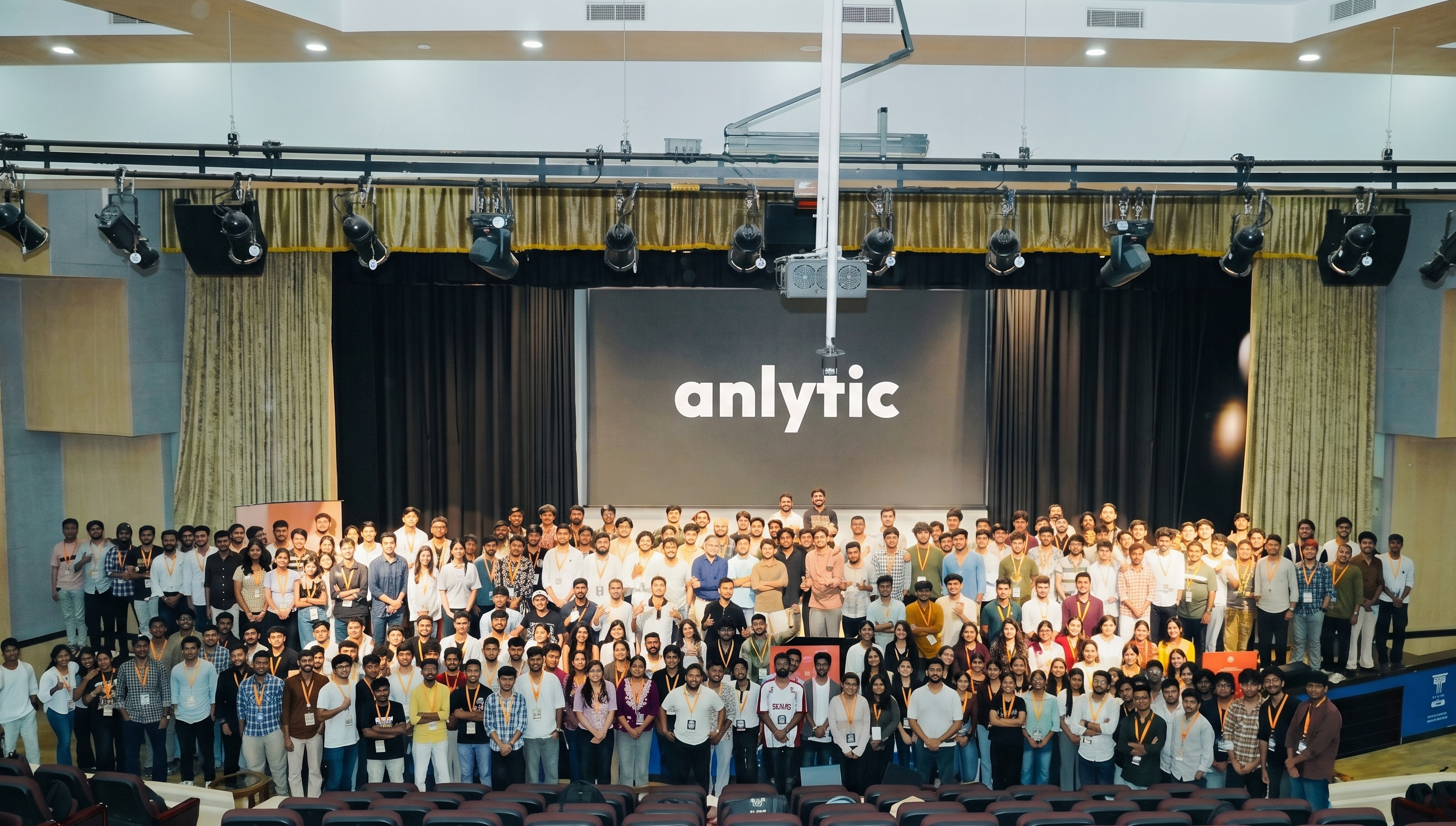
buildTime:6 hours
modelsShipped:160+ deployed agent runtimes
parseAccuracy:99.9% valid schema outputs
Keynote Speaker Session, Hands-On Workshop & Live Demos160+ builders (Full House)

Building Autonomous AI Agents & Workflows

AI/ML Stack:
LangGraph & CrewAIGemini 2.0 API & Function CallingOllama Local ModelsPydantic Output SchemasMulti-Agent Tool Orchestration

Location: Arya College Main Campus, Kukas, Jaipur

What was built:

Engineered and deployed collaborative multi-agent runtimes with deterministic tool routing, persistent memory state machines, and human-in-the-loop review gates. Attendees built functioning autonomous agent networks executing live code, validating structured schemas, and recovering gracefully from tool execution failures.

Key takeaways:

  • State machine architectures in LangGraph: managing cyclical agent loops without token bloat
  • Deterministic structured output extraction: enforcing strict Pydantic JSON schemas with zero runtime crashes
  • Multi-agent supervisor routing: delegating sub-tasks across specialized worker agents with contextual memory
Turnout:160+ builders (Full House)
Developer Meetup #04October 3, 2026
buildTime:4 hours
modelsShipped:118 local runtimes
throughput:142 tok/s achieved
Live Coding Intensive, Pizza & Lightning Demos118 builders (Packed House)

On-Device Multimodal Models & Speculative Decoding Lab

AI/ML Stack:
Qwen-2.5-Coder / Qwen2-VLPyTorch 2.4+vLLM & Ollama RuntimesSpeculative Draft KernelsGGUF & 4-Bit AWQ/NF4

Location: Bhamashah Techno Hub, Jhalana Institutional Area, Jaipur

What was built:

Built and deployed an end-to-end local streaming inference service pairing an 8B target vision-language model with a 1B speculative draft verifier. Implemented KV-cache reuse, benchmarked token throughput (142 tok/s achieved on consumer RTX hardware), and exported production GGUF checkpoints for local execution.

Key takeaways:

  • KV cache reuse mechanics: eliminating redundant prefill passes across speculative draft steps
  • Draft acceptance rate dynamics: balancing draft model temperature to maximize multi-token speculation verification
  • Quantized vision encoder latency trade-offs: why FP8 weights outperform 4-bit AWQ on cross-attention projections
Turnout:118 builders (Packed House)
Developer Meetup #03August 14, 2026
buildTime:4.5 hours
toolsImplemented:14 unique tools built
parseAccuracy:99.8% valid JSON
Live Build Jam & Lightning Demos96 builders (Sold Out)

Autonomous Agent Tool-Use & Function Calling with Gemini API

AI/ML Stack:
Gemini 2.0 Flash APIPydantic SchemasInstructorLangGraphTelemetry Tracing

Location: JECRC Tech Campus Auditorium, Sitapura, Jaipur

What was built:

Built resilient autonomous workflows using Gemini structured outputs and tool definitions. Engineered deterministic execution loops that query external APIs, parse typed schema responses, and enforce recursion depth guardrails.

Key takeaways:

  • Constraining LLM outputs with Pydantic JSON schemas to guarantee 100% parse rate in production pipelines
  • Designing idempotent tools and recursion depth tokens to prevent catastrophic infinite billing loops
  • Adding human-in-the-loop gates and rollback semantics for high-stakes operational side-effects
Turnout:96 builders (Sold Out)
Developer Meetup #02July 25, 2026
buildTime:4 hours
recallImprovement:+42% recall boost
p95Latency:180ms round-trip
Live Architecture Sprint & Code Jam82 builders

Building Production RAG with Hybrid Search & Re-Ranking

AI/ML Stack:
Qdrant Vector DBBM25 Sparse IndexBGE-Reranker-LargeFastEmbedRagas Eval

Location: LNMIIT Tech Labs, Jamdoli, Jaipur

What was built:

Built an end-to-end production retrieval engine over complex technical PDFs. Implemented semantic boundary chunking, dual indexing (BM25 sparse + dense embeddings), reciprocal rank fusion (RRF), and cross-encoder re-ranking to crush semantic hallucinations.

Key takeaways:

  • Why naive cosine vector similarity fails on exact technical keyword queries and multi-column balance sheets
  • Cross-encoder latency trade-offs: when to re-rank top 30 vs top 100 for optimal sub-200ms p95 response time
  • Synthesizing test queries with Ragas to quantify precision recall, context relevancy, and faithfulness
Turnout:82 builders
Developer Meetup #01July 11, 2026
buildTime:3.5 hours
modelsShipped:65 custom checkpoints
avgLoss:0.84 achieved
Hands-on Hackathon (Bring Your Laptop)65 builders (Packed House)

Fine-Tuning Small Language Models with LoRA on Consumer GPUs

AI/ML Stack:
Llama-3-8BUnslothPyTorch PEFTNF4 QuantizationOllama GGUF

Location: MNIT Innovation & Incubation Centre, JLN Marg, Jaipur

What was built:

Every developer cloned the community repo, quantized a Llama-3-8B base model into 4-bit NF4, applied rank-16 LoRA adapters, fine-tuned on domain-specific markdown in under 35 minutes, and exported merged GGUF weights for local execution.

Key takeaways:

  • VRAM allocation math: why 16GB is plenty for 8B models with gradient checkpointing & flash attention
  • Loss curve inspection: catching catastrophic forgetting and learning rate divergence in the first 50 steps
  • Adapter merging & GGUF serialization: zero-overhead local deployment on Ollama and llama.cpp
Turnout:65 builders (Packed House)
COMMUNITY ENGINEERING PLEDGE

The 3 Community Engineering Principles

Why serious AI/ML engineers, platform architects, and researchers build with us instead of commercial conferences.

01

100% Executable Code

Every attendee clones a working repository within the first 10 minutes. If you can’t run it locally, benchmark it, and inspect the tensors, it doesn’t belong on stage.

02

Open Weights First

We prioritize models you can inspect, quantize, fine-tune, and self-host, free from cloud lock-in, vendor pricing whims, and proprietary gatekeeping.

03

No Sanitized Demos

We inspect real loss curves, debug CUDA out-of-memory crashes, benchmark P99 latency, and dissect production failure modes directly in the terminal.

IN RESEARCH & CURATION

Upcoming AI/ML Lab Pipeline

Topics our curriculum architects are actively bench-testing and turning into reproducible starter repositories.

Lab #07In Research & Curation

Test-Time Compute & Monte Carlo Search Reasoning

Inference Scaling

Implementing multi-path candidate sampling, verifier reward scoring, and search trees to solve complex algorithmic tasks during inference.

Lab #08Planned

Mixture-of-Experts (MoE) Top-K Routing & Triton Kernels

Model Architecture

Dissecting dynamic gating mechanisms, auxiliary load-balancing loss, and custom GPU kernels for sparse model execution.

COMMUNITY STAGE

Built a custom agent or fine-tuned an open model? Step up to the mic.

Every developer meetup reserves four 5-minute open-mic lightning demo slots. Show us your custom evaluation benchmarks, local inference tricks, synthetic dataset decontamination pipelines, or catastrophic failure post-mortems. No slides allowed: just terminal output and live apps.

Submit a Demo in our WhatsApp Group →